Pouring concrete in Greer's heat and cold: the calendar a good crew works to
From June to September the Upstate afternoon is above 85°F and thick with humidity, and from December to February the nights freeze and the days thaw. Concrete can be poured in both, but not at any hour and not without the precautions that most driveway failures trace back to skipping.
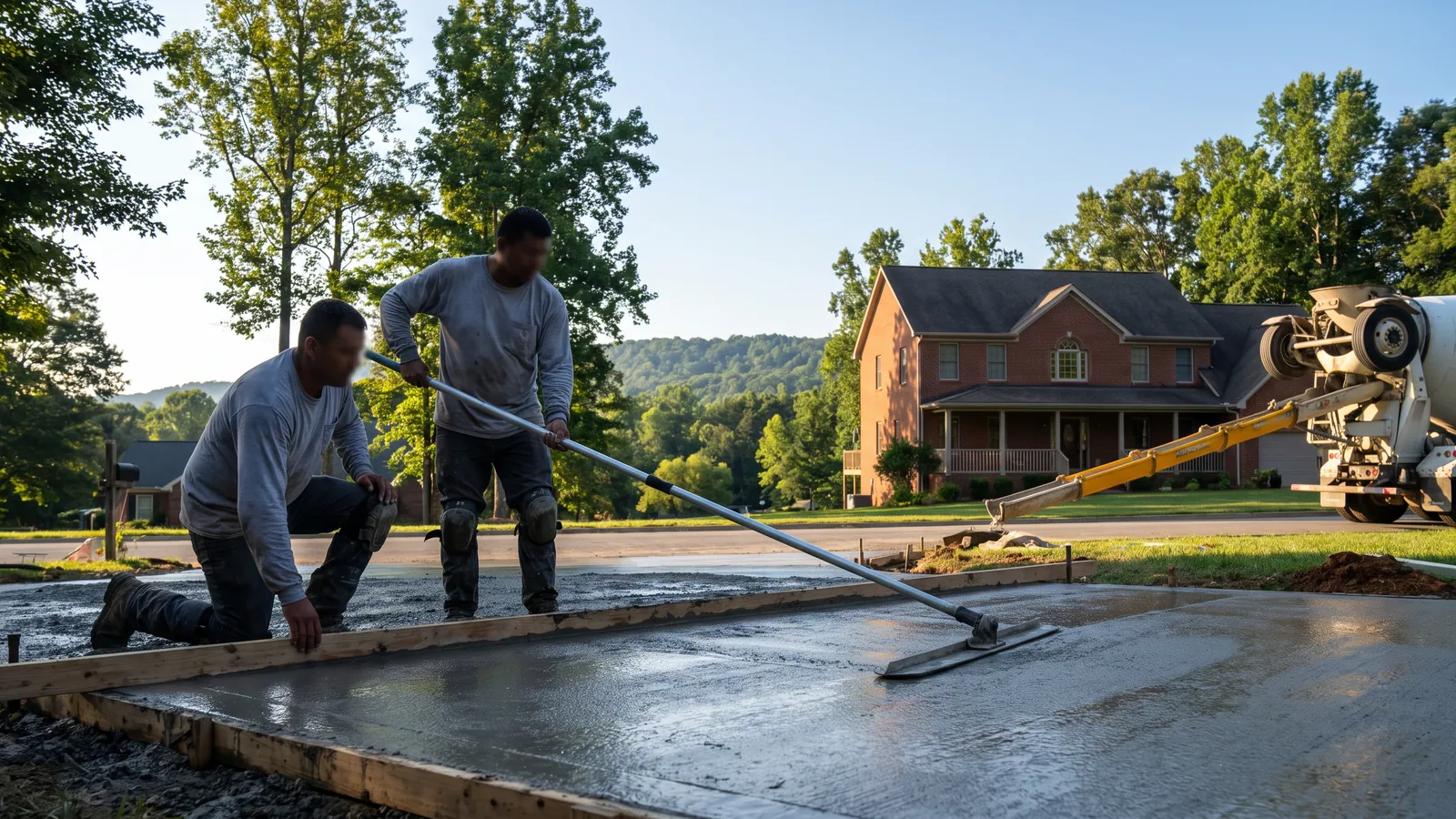
Concrete does not dry; it cures. Cement reacts with water over days and weeks to gain strength, and the job of the first few days is to keep enough water in the slab, at the right temperature, for that reaction to finish. Greer's climate works against that in two opposite ways at two ends of the year, and the way a crew schedules and protects a pour is a reliable sign of whether they understand the place they are working in.
Summer: the surface dries faster than the slab
On a 92°F afternoon with a breeze, the surface of a fresh slab loses water to the air faster than bleed water can rise from below. The top shrinks while the concrete underneath is still soft, and the result is plastic shrinkage cracking: a web of short, shallow cracks across the surface within hours of the pour, before the slab has any strength to resist them. It is cosmetic at first and a path for water later, and it is the most common summer failure on Upstate driveways.
What we do about it:
- Dawn starts. Summer pours are scheduled for the coolest part of the day so finishing is done before the heat peaks.
- A dampened base. The stone and forms are wetted so they do not pull water out of the slab from below.
- Mix adjustments. Retarding admixtures, chilled water or ice at the plant on the hottest days, and fiber reinforcement where it suits the slab.
- Wind breaks and misting. On windy, hot days the surface is shielded and kept from drying while it is finished.
- Curing, not drying. A curing compound or wet curing straight after finishing, so the slab holds its water for the days it needs. A slab that is simply left to dry in August is a slab that will craze and scale.
Winter: a freeze before the concrete has strength
Fresh concrete that freezes in its first day or two loses strength it never gets back, and a surface that freezes before it has set scales off in the spring. Greer's winter is not Minnesota's, but with 40 to 60 freeze-thaw days a year it has enough cold nights to matter. The approach is the opposite of summer: wait for a window of a few days above freezing, pour in the middle of the day, use an air-entrained mix and accelerating admixtures where appropriate, and cover the slab with insulating blankets if a cold night follows. A pour that cannot get that window waits a week; concrete is patient and a cracked slab is forever.
Spring and fall: the easy months
March through May and late September through November are when the Upstate's concrete gets poured most easily: mild days, cool nights, a slab that cures at a sensible pace. They are also the wet months, and a pour waits for a dry base and a forecast without heavy rain in the first day. Fall is the best time of all for sealing a slab poured earlier in the year.
What the calendar means for you
A written estimate from us names the season's constraints: a summer driveway is scheduled for an early start and cured; a winter one waits for a frost-free window; a stamped pour is staffed for the set. If a contractor offers to pour your driveway at two in the afternoon in July, or on a day the forecast says 28°F that night, the price is not the thing to worry about.
Questions this guide gets asked
Can you pour concrete in July in Greer?
Yes, early in the morning, on a dampened base, with a mix adjusted for the heat and proper curing afterward. Afternoon pours in summer are how slabs get plastic shrinkage cracks.
Can you pour in winter?
Yes, in a window of a few frost-free days, poured midday, with an air-entrained mix and blankets if a cold night follows. If the window is not there, the pour waits.
What is plastic shrinkage cracking?
A web of short, shallow cracks that appears within hours of a pour when the surface dries faster than the slab beneath. It is a hot-weather problem and it is preventable.
What does curing mean?
Keeping water in the slab for its first days so the cement can finish reacting and gain strength. A curing compound or wet covering does it; leaving the slab to dry in the sun does not.
What is the best month to pour a driveway?
Spring and fall are easiest. Summer and winter are fine with the right precautions, which is what the estimate specifies.
How soon after a pour can it rain?
Light rain after finishing is harmless; heavy rain in the first hours can mark the surface, so a pour waits for a forecast with a dry first day.
Read next: Freeze-thaw and sealing · Concrete driveways · Stamped and decorative concrete · Red clay and your concrete